
A breakdown is never convenient, but in Las Vegas the heat turns it into something more serious. When summer temperatures climb past 100 degrees, the pavement radiates heat, the sun beats down with no shade for miles and a car that stops can become uncomfortable and even unsafe within minutes. Whether you are on the Strip, stuck on the 215 or heading out toward Red Rock or Lake Mead, knowing what to do before something goes wrong can protect you and your passengers. This guide covers roadside breakdown tips for Las Vegas drivers: how to stay safe in the heat, how to get help fast, what to keep in your car and how to lower the odds of a breakdown in the first place. If you ever need emergency car repair in Las Vegas, start with these steps.
Why Breakdowns Are Riskier in Vegas Heat
Extreme heat affects both your car and the people in it. Engines work harder, batteries lose capacity faster, tires run hotter and cooling systems are pushed to their limits. At the same time, a stranded driver faces direct sun, hot air and limited shade. Heat related illness can develop quickly, especially for children, older adults and anyone with health conditions. That is why the first minutes of a breakdown matter so much, and why a plan, along with a few basic supplies, is so valuable.
Step One: Control the Situation
As soon as you notice a problem, such as a loss of power, a strange noise, steam or a warning light, stay calm and act deliberately.
- Turn on your hazard lights immediately so other drivers know you are in trouble.
- Ease off the accelerator and brake smoothly. Avoid sudden moves.
- Keep steering. If the engine stops, you may lose power assist, so the wheel and brake pedal will feel heavier. The car can still be controlled with firm, steady effort. Your owner’s manual explains how your vehicle behaves in this situation.
- Look for a safe place to stop, such as a parking lot, a wide shoulder, an exit ramp or a quiet side street.
Step Two: Choose Where to Stop Wisely
Where you stop matters. If you can reach a business, a gas station or a shaded parking structure, that is usually much better than the side of a high speed road. Shade helps with the heat, and being near people and buildings can make it easier to get help. If you must stop on a highway shoulder, move as far from traffic as you safely can, keep your wheels turned away from the road and leave the hazards flashing. Avoid stopping on a curve or just over a hill, where other drivers cannot see you in time.
Step Three: Protect Yourself From the Heat
Heat is the biggest added danger in Las Vegas. Keep these points in mind while you wait for help:
- Drink water regularly. Dehydration sets in faster than most people expect. Keep bottled water in the car all year.
- Find shade. If it is safe, look for shade from a building, an overpass or a tree. If you stay in the car, crack the windows if it is safe to do so.
- Use the air conditioning only if the car is running and it is safe. If the engine is overheating, do not run it.
- Never leave children or pets in a parked car, even for a short time. Cabin temperatures can climb to dangerous levels very quickly.
- Cover up. Hats, light clothing and sunscreen help if you have to wait outside. Hot pavement and metal can burn skin, so be careful.
- Know the warning signs of heat illness, such as dizziness, heavy sweating, nausea, headache or confusion. If anyone shows these signs, call 911 right away.
Step Four: Decide Whether to Stay or Leave the Car
In most cases, staying with your vehicle is the safer choice, since it is easier for help to find you. Walking long distances in desert heat can be dangerous. The exception is if you see smoke, flames or any sign of fire, or if the car is in a spot where it could be hit. In those cases, get everyone out, move well away from the road and call 911. Do not open the hood if you see smoke or fire.
Step Five: Call for the Right Kind of Help
Once you are in a safe position, decide who to call:
- 911 if anyone is hurt, you feel unsafe, there is fire or smoke, or you are in a dangerous spot.
- Roadside assistance through your insurance, auto club or car warranty if you have it.
- A tow service if the vehicle cannot be driven.
- A mobile mechanic if the problem might be fixable on the spot, such as a dead battery or certain starting problems.
When you call, give your exact location, including the road, direction of travel, nearest exit or cross street, and any landmarks. Describe what happened, what your car is doing and what symptoms you noticed. Keep your phone charged, and if you can, share your location with someone you trust.
Common Breakdown Situations and What to Do
Overheating
If the temperature gauge climbs into the hot zone or you see steam, pull over safely and turn off the engine. Do not open the radiator or coolant cap while the engine is hot, because the system can be under pressure and extremely hot. Wait for the engine to cool, and check your owner’s manual for guidance. Overheating in the desert can cause serious engine damage, so do not keep driving.
The car will not start
A dead battery is one of the most common causes, and Las Vegas heat is hard on batteries. Our guide on the top 10 reasons your car won’t start covers the likely causes and what you can safely check. If you decide to try a jump start, follow your owner’s manual closely.
Flat tire or blowout
Hot pavement increases tire stress, and tires that are worn, underinflated or overloaded are more likely to fail. If a tire blows, grip the wheel firmly, ease off the gas, slow down gradually and steer to safety. Changing a tire on a busy road is risky, so if you are not in a safe spot, call for help. Your owner’s manual explains how to use the spare and jack.
Transmission trouble
Slipping gears, delayed shifts, grinding or a burning smell can point to transmission problems, and heat makes them worse. Stop driving as soon as it is safe if you notice these symptoms. Our post on the signs your car needs transmission repair explains what to look for.
Warning lights and strange noises
A flashing check engine light, an oil pressure warning, grinding sounds, knocking or burning smells are all good reasons to stop and get help rather than push on. Check your owner’s manual for what each warning light means.
What to Keep in Your Car
A small kit can make a big difference in the desert. Consider keeping these items in your vehicle:
- Plenty of bottled water, more than you think you will need.
- A phone charger or power bank.
- A sunshade for the windshield, and a hat and sunglasses.
- A flashlight with fresh batteries.
- Reflective triangles or flares.
- Jumper cables or a portable jump starter.
- A basic tool kit and work gloves, which help with hot metal parts.
- A tire pressure gauge and a working spare, if your car has one.
- Snacks that hold up in heat.
- A first aid kit.
- Your owner’s manual and insurance information.
Avoid leaving items that react badly to heat, such as certain electronics or aerosol cans, in a hot car.
How to Prevent a Heat Related Breakdown
You cannot prevent every breakdown, but you can lower the odds. Before the hottest months, and regularly throughout the year, consider these steps:
- Test the battery. Heat shortens battery life, so have it tested, especially if it is a few years old or slow to crank.
- Check the cooling system. Look at coolant levels when the engine is cool and inspect hoses and belts for cracks or wear.
- Inspect your tires. Check pressure when the tires are cool, and look for cracks, bulges and uneven wear.
- Service the AC. A weak air conditioner is a comfort problem and a safety concern in desert heat.
- Replace worn wipers and keep fluids topped off. Sudden monsoon storms can arrive quickly.
- Check your brakes. Heat and stop and go traffic add wear.
- Follow your owner’s manual schedule for oil changes and other service.
- Do not ignore warning lights or new noises.
It is also smart to avoid long drives with a low fuel tank and to let someone know your route when heading into remote areas.
How a Mobile Mechanic Helps After a Breakdown
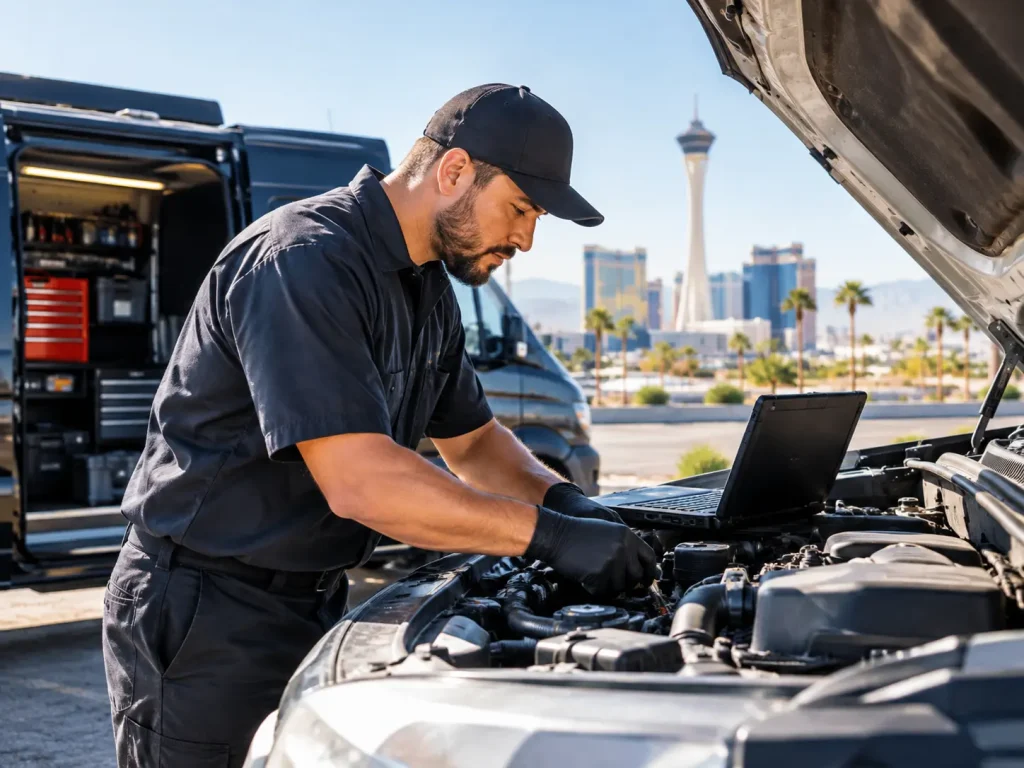
A mobile mechanic can come to you, which is especially helpful when you do not want to sit in the heat waiting for a tow and a shop appointment. A technician can diagnose the problem on the spot and, in many cases, handle common repairs such as battery replacement, certain starter and charging system work, belts and hoses and more. If the problem is bigger, you will at least know what you are dealing with so you can decide what to do next. Some repairs may need a shop, and a good technician will be upfront about it.
Your Quick Roadside Plan
- Turn on hazard lights and slow down smoothly.
- Get to a safe spot, ideally in shade and away from fast traffic.
- Protect everyone from the heat, and never leave kids or pets in the car.
- Call 911 for emergencies, or call for roadside help.
- Share your exact location and describe the symptoms.
- Stay hydrated and stay put unless it is unsafe.
- Have the cause diagnosed and repaired.
Breakdowns are stressful, but a clear plan and a well stocked car turn a bad day into a manageable one. If your car has left you stranded, or you want to get ahead of heat related problems, visit our homepage to learn more, or contact us to schedule a visit.